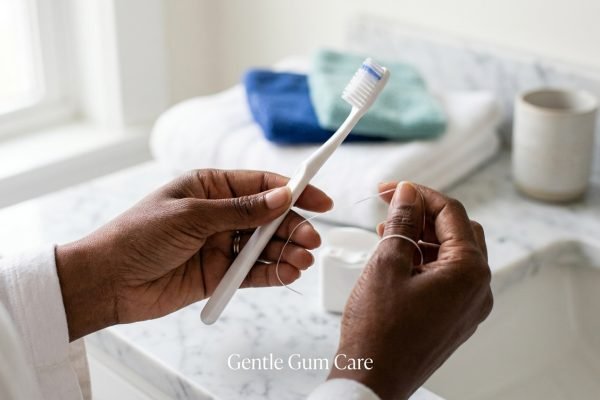
Have you spotted pink in the sink after brushing? I’m Dr. Bruce Vafa, one of the doctors at Holistic Smile Care in West Hollywood, and I hear this question almost every week. You can read more about me and my colleagues on our Meet Our Dentists in Hollywood page. The good news is that bleeding gums when brushing is common, and in most cases you can turn it around with simple, gentle habits.
Why Do My Gums Bleed When I Brush?
Healthy gums are firm and pale pink. They do not bleed from normal brushing. When your gums bleed, they are telling you something needs attention.
The most common cause is plaque. Plaque is a sticky film of bacteria that builds up on your teeth every day. When it sits along the gumline, it irritates the gum tissue. The gums swell, turn red, and bleed easily. Dentists call this early stage gingivitis.
Think of it like a small cut on your hand. If you keep rubbing it, it stays irritated. Once you clean and care for it, it heals. Your gums work the same way.
How Common Is Bleeding Gums?
You are far from alone. According to a national study by Eke and colleagues in the Journal of the American Dental Association (2018), about 42.2% of U.S. adults aged 30 and older have some form of gum disease. The same research found that the number rises to 59.8% in adults aged 65 and older.
The CDC shares more on this topic in its overview of periodontal (gum) disease. These numbers show why early care matters. Many of my patients in West Hollywood, Beverly Hills, and across Los Angeles tell me they waited because they thought a little blood was normal. The earlier you act, the easier the fix.
Common Reasons Your Gums Bleed When You Brush
Plaque is the top cause, but it is not the only one. Here are the reasons I see most often in my practice.
Plaque and Tartar Buildup
If plaque stays on your teeth, it hardens into tartar within a few days. Tartar is rough and sticks tightly to teeth. You cannot brush it away at home. Only a professional cleaning can remove it. Once the tartar is gone, your gums can calm down and heal.
Brushing Too Hard
Many people think harder brushing means cleaner teeth. It does not. Firm scrubbing can bruise your gums and wear them down over time. A soft-bristled brush and light, small circles do a better job with less irritation.
Starting a New Routine
Did you just begin flossing again? A little bleeding in the first week is common. Your gums are getting used to being cleaned. If you keep going gently each day, the bleeding usually fades within one to two weeks.
Hormone Changes
Pregnancy, puberty, and menopause can make gums more sensitive. Hormone shifts increase blood flow to the gum tissue. That can make gums puffy and more likely to bleed. Extra care and regular checkups help a lot during these times.
Nutrition and Lifestyle
Your gums need good fuel. Low vitamin C and vitamin K can make gums more fragile. Smoking and vaping reduce blood flow and hide early warning signs. Stress and poor sleep can also affect how well your body fights gum inflammation.
Certain Medications and Health Conditions
Blood thinners can make bleeding more noticeable. Diabetes can make gum problems harder to control. Tell your dentist about your health history and any medicines you take. This helps me give you safe, personal advice.
What Bleeding Gums Can Tell You About Your Whole Body
As a holistic dentist, I look at the full picture. Your mouth is connected to the rest of your body. Gum inflammation and overall health often influence each other. Research has linked gum disease with heart health and blood sugar control.
That does not mean you should worry. It means your gums are worth your attention. When you care for them, you support your whole-body wellness too. I love helping patients see their smile as part of their total health.
How to Stop Bleeding Gums When Brushing
Here are simple steps you can start today. Most of them take only a few minutes.
- Use a soft-bristled toothbrush. Replace it every three months, or sooner if the bristles look bent.
- Brush gently for two minutes, twice a day. Angle the bristles toward the gumline and use small circles.
- Clean between your teeth daily. Floss, interdental brushes, or a water flosser all work well.
- Rinse with a gentle, alcohol-free mouthwash. This can help freshen your mouth without drying your gums.
- Eat colorful fruits and vegetables. Oranges, bell peppers, and leafy greens give your gums key nutrients.
- Drink plenty of water. Water helps rinse away food and bacteria.
- Stay on schedule with cleanings. A professional cleaning removes tartar that brushing cannot reach.
Be patient and consistent. Your gums often start to look and feel better in about two weeks. If you want a deeper look at how gum problems develop and how we treat them, read our blog on gum disease treatment.
Bleeding Gums vs. Gum Disease: Know the Stages
Gum health moves along a spectrum. Knowing where you are helps you choose the right next step.
Gingivitis is the early stage. Your gums may look red or puffy and bleed when you brush or floss. This stage is fully reversible with good home care and a professional cleaning.
Periodontitis is the more advanced stage. The infection spreads below the gumline and affects the bone that holds your teeth. You may notice gums pulling back, bad breath that will not go away, or teeth that feel loose. This stage needs professional treatment, but it can be managed well when we catch it.
That is why I never ignore bleeding gums when brushing. A quick exam can show us exactly what is going on. Many patients leave relieved, with a clear and simple plan.
When Should You See a Dentist?
Book a visit if you notice any of these signs:
- Bleeding that lasts longer than two weeks
- Gums that look red, swollen, or shiny
- Persistent bad breath or a bad taste
- Gums that seem to be pulling away from your teeth
- Teeth that feel loose or look longer than before
- Bleeding without any brushing or flossing
At our West Hollywood office, we start with a gentle exam and a careful look at your gum health. We measure the small spaces around each tooth and check for tartar. Then we build a plan that fits your needs and your lifestyle. If it has been a while since your last cleaning, our guide on how often you should get a dental cleaning can help you choose a schedule.
Our Holistic Approach to Healthier Gums
At Holistic Smile Care, I focus on gentle, whole-person dentistry. I want to find the root cause of your gum bleeding, not just treat the surface. We take time to listen to you, review your habits, and look at your overall health.
Patients visit us from West Hollywood, Beverly Hills, Hollywood, and from as far as Northridge. Many of them come because they want a calm, thoughtful approach. Whether you live a few minutes away or drive in from Northridge, you will get the same personal care and clear answers.
Your gums can heal, and I love watching it happen. Many patients return for a follow-up and are amazed at how pink and firm their gums look after just a few weeks of steady care.
Take the Next Step Toward Healthy Gums
Bleeding gums are a signal, not a sentence. With the right habits and a little professional support, you can feel confident when you brush and smile. Start with a soft brush, gentle technique, and daily cleaning between your teeth. Then let us help with the rest.
If you are in West Hollywood, Los Angeles, or nearby, I would be glad to see you. Reach out to Holistic Smile Care to schedule an exam and take the first step toward healthier gums.
Frequently Asked Questions
Why do my gums bleed when I brush my teeth?
Gums usually bleed because plaque has built up along the gumline and caused inflammation. Brushing too hard or starting a new flossing habit can also cause light bleeding. A dental exam can confirm the exact cause.
Is it normal for gums to bleed when brushing?
Occasional light bleeding is common, but it is not a sign of fully healthy gums. If it lasts longer than two weeks, you should see a dentist. Early care can often reverse the problem quickly.
How do I stop my gums from bleeding when I brush?
Use a soft-bristled toothbrush and brush gently for two minutes, twice a day. Clean between your teeth daily and keep up with professional cleanings. Most people see improvement within one to two weeks.
Can bleeding gums be a sign of gum disease?
Yes, bleeding gums are often the first sign of gingivitis, the early stage of gum disease. When caught early, gingivitis is reversible with good home care and a professional cleaning. A dentist can tell you if the problem has gone deeper.
Should I keep brushing if my gums are bleeding?
Yes, keep brushing and flossing gently. Cleaning away plaque is what helps your gums heal. Stopping can make the bleeding worse, so use a soft brush and a light touch instead.
Written by: Dr. Bruce Vafa