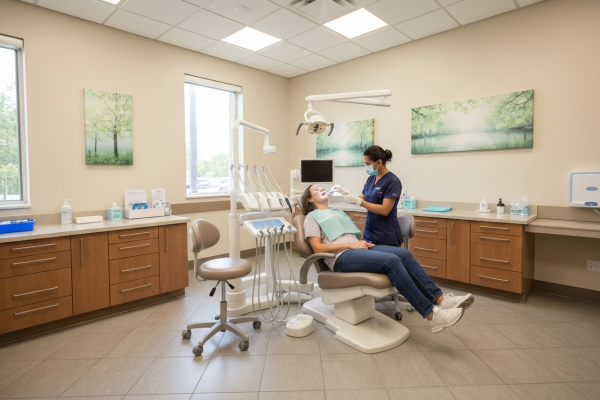
When you walk into a dental office, the first thing you usually notice is the smell. That distinctive “dental office smell” has been around for decades. But in my holistic practice, I believe the air you breathe should be as clean and refreshing as a walk in nature. As Dr. Bruce Vafa, I have dedicated my career to looking at the whole picture of your health, not just your teeth. Today, I want to take you behind the scenes to show you exactly how we prioritize your well-being through advanced air purification and strict safety protocols.
For many years, dentistry focused strictly on fixing cavities and cleaning gums. However, recent global events have taught us all a valuable lesson: the air we share matters. In a holistic setting, we have always known this. We understand that oral health is a gateway to systemic health. By implementing rigorous standards, we are defining what safe dentistry truly looks like in the modern world.
Why Air Quality is the Foundation of Holistic Care
You might wonder why a dentist talks so much about air. Dental procedures, by their very nature, create aerosols. When we use high-speed drills or ultrasonic scalers, tiny water droplets mixed with saliva, plaque, and sometimes blood are released into the air. In the dental world, we call this “aerosolization.”
In a standard office, these particles can linger. But in a holistic office, we treat the air as a vital component of the treatment plan. My goal is to ensure that when you sit in my chair, you are not inhaling toxins, mercury vapors, or airborne pathogens. We want to protect your immune system, not challenge it. This approach is central to the philosophy of biologic dentistry, where every material and method is chosen to support your overall wellness.
The Hidden Dangers in Dental Aerosols
It is not just about catching a cold or a virus. As a holistic dentist, I am deeply concerned with heavy metals, specifically mercury found in old silver (amalgam) fillings. When these fillings are removed without proper safety measures, mercury vapor is released. This vapor is odorless and colorless, but it can be harmful if inhaled.
By controlling the air quality, we are doing two things:
- We are removing biological contaminants (viruses and bacteria).
- We are capturing chemical toxins (mercury vapors and chemical smells).
My Multi-Layered Air Purification Protocol
To achieve safe dentistry, I don’t rely on just one device. I use a “Swiss Cheese” model of protection. If one layer misses a particle, the next layer catches it. Here is the technology I use to keep our environment pristine.
1. Medical-Grade HEPA Filtration
In my treatment rooms, you will see high-efficiency air purifiers running constantly. We use medical-grade HEPA (High-Efficiency Particulate Air) filters. These are not the same as the ones you might buy for your bedroom. These powerful machines are designed to scrub the air of 99.97% of particles that are 0.3 microns in diameter. This includes dust, pollen, mold, and bacteria.
2. Source Capture: The Elephant Trunk
General air filtration is great, but catching the problem at the source is better. I utilize extra-oral suction units, often referred to as “elephant trunks” because of their shape. When I am working on your teeth, this device sits close to your mouth. It acts like a powerful vacuum specifically for the air directly in front of you. As aerosols are generated, they are immediately sucked into the machine before they can float into the room.
3. Ionization Technology
I am also a big fan of negative ion generators. In nature, air feels fresh near waterfalls or the ocean because of negative ions. These ions attach themselves to airborne particles like dust and viruses, making them heavy so they drop out of the air and can be cleaned up, rather than floating around for you to breathe.
Safe Mercury Removal: The SMART Protocol
One of the most common reasons patients come to see me is to replace old metal fillings. This is where air quality becomes critical. I follow the SMART protocol (Safe Mercury Amalgam Removal Technique). This is a rigorous set of safety recommendations to protect the patient, the dentist, and the staff from mercury exposure.
Data Point 1: According to safety studies regarding dental aerosols, without high-volume suction, splatter and aerosols can travel up to 6 to 8 feet from the patient’s mouth. This is why our containment protocols are non-negotiable.
During this procedure, air filtration is ramped up. We use a dental dam to isolate the tooth, and we ensure that the high-volume suction is positioned to capture vapors the moment they are released. This is the difference between simply “fixing a tooth” and practicing holistic, whole-body preventive care.
Air Contaminant Reduction in Dental Settings
Comparing Standard Protocols vs. Holistic Safety Protocols
No Filtration
Standard Suction
My Holistic Protocol
Beyond the Air: Surfaces and Water
While air is invisible, surfaces are not. Safe dentistry extends to everything you touch. In my office, we use hospital-grade disinfectants that are effective but less toxic than harsh industrial chemicals. We are mindful of chemical sensitivities. Many of my patients have chemical sensitivities, so I choose cleaning agents that kill pathogens without leaving behind a cloud of artificial fragrances or volatile organic compounds (VOCs).
Ozonated Water
Another tool I love is ozone. We use ozonated water in our lines. Ozone is a powerful natural oxidizer. It kills bacteria, viruses, and fungi on contact, but it breaks down into pure oxygen. It is the ultimate holistic cleaner—powerful against germs but gentle on the human body. By flushing our water lines with ozone, we ensure that the water spraying into your mouth is completely pure.
The Patient Experience: Peace of Mind
I know that visiting the dentist can cause anxiety for some people. Part of that anxiety comes from feeling vulnerable. When you know that the environment has been scrubbed clean using the highest standards of technology, it helps you relax.
When you walk into my treatment room, you won’t smell that acrid “dentist smell.” You will likely notice that the air feels lighter. This is intentional. It allows your nervous system to down-regulate. When you are relaxed, your body heals faster, the anesthesia works better, and you have a much more positive experience.
Data Point 2: High-quality HEPA filtration systems, like the ones used in my office, are certified to capture particles as small as 0.003 microns with an efficiency of over 99.5%, which includes the smallest of viral particles.
For more in-depth information on the importance of safety protocols regarding materials we remove, I recommend reading this article from the International Academy of Oral Medicine and Toxicology (IAOMT) regarding safe removal techniques.
Investing in Your Health
Implementing these systems is a significant investment. Medical-grade purifiers, extra-oral suction units, and ozone generators are not cheap. However, I do not see this as an expense; I see it as an investment in your health and the health of my team. I spend my days in this office, and my staff does too. We breathe this air all day long. By ensuring the environment is safe for you, I am also ensuring it is safe for us.
Holistic dentistry is about the long game. It is about making sure that the work we do today supports your health ten, twenty, or thirty years down the road. You cannot have long-term health if you are being exposed to toxins during treatment. That is why I am so strict about these protocols.
FAQ: Air Quality and Safety in Our Office
Does the extra-oral suction make a lot of noise?
The units do make a humming sound, similar to a vacuum cleaner. However, most patients find it becomes “white noise” very quickly. We can also provide noise-canceling headphones if you prefer a quieter experience or want to listen to your own music.
Is this protocol only for removing mercury fillings?
No. While the protocols are most critical during amalgam removal, we maintain high air quality standards for all procedures, including cleanings and check-ups. We believe safe dentistry should be the standard for every appointment, not just special ones.
Does UV light really kill bacteria?
Yes, UV-C light is scientifically proven to disrupt the DNA of bacteria and viruses, rendering them unable to reproduce. When used inside an air purification system, it adds an extra layer of protection by sterilizing the air that passes through the filter.
I have severe asthma; is your office safe for me?
Many of our patients suffer from respiratory issues or chemical sensitivities. Because we filter out dust, allergens, and avoid harsh chemical smells, our office is often one of the safest places for asthmatic patients to be. Please let us know about your condition when you book so we can ensure you are comfortable.
How do you know the air is actually clean?
We regularly maintain our equipment and change filters according to the manufacturer’s strict schedules. The difference is also sensory—you can usually feel and smell the freshness of the air compared to a standard clinical environment.
Your Health is Worth the Extra Step
I hope this gives you a clearer picture of what happens before you even sit in the chair. My commitment to you goes far beyond your smile. It encompasses the air you breathe and the environment you heal in. By combining advanced technology with a holistic philosophy, we create a space where you can feel truly secure.
If you have been looking for a dental home that takes safety as seriously as you do, I would love to meet you. We can discuss your health goals and show you firsthand how refreshing a visit to the dentist can actually be. Your health is your greatest asset, and protecting it is my greatest privilege.