Hello there. I am Dr. Bruce Vafa, and today I want to have a heart-to-heart conversation about your gums. If you have recently visited a dentist and heard the words “gum disease” or “periodontitis,” you might have also heard a recommendation for a procedure called “scaling and root planing.” In the dental world, we often call this SRP, or sometimes just a “deep cleaning.”
For many of my patients, the idea of a deep cleaning sounds a bit intimidating. Traditionally, this procedure involves manual scraping tools, local anesthesia, and a bit of recovery time. While it is a proven therapy, dental technology has moved forward at an incredible pace. Patients today are asking for less invasive options that offer faster healing and less discomfort. That is why I want to talk to you about the modern alternatives to root planing and scaling, specifically focusing on a revolutionary treatment known as the LANAP Protocol.
My goal is to help you keep your natural teeth for a lifetime. To do that, we need to treat the infection in your gums without causing you unnecessary fear or pain. Let’s explore what your options really are.
Why Do We Need to Treat Gum Disease?
Before we look at the alternatives, we have to understand the enemy. Gum disease isn’t just about bleeding when you floss. It is a chronic bacterial infection. Plaque and tartar build-up below the gum line, causing the gums to pull away from the teeth. This creates “pockets” where bacteria hide and multiply.
If left untreated, this bacteria eats away at the bone that holds your teeth in place. Eventually, teeth become loose and fall out. Furthermore, there is a strong connection between gum disease and systemic health issues like heart disease and diabetes. Treating your gums is actually about treating your whole body.
The Traditional Method: Scaling and Root Planing (SRP)
For decades, SRP has been the “gold standard.” It involves physically scraping the tartar off the tooth root and smoothing out the rough spots so bacteria can’t stick as easily. While effective, it has downsides:
- It can be uncomfortable, requiring numbing shots.
- It often leads to gum recession (where the gum line lowers).
- It can cause tooth sensitivity.
- For severe cases, it might not be enough, leading to invasive gum surgery (cutting and stitching).
Fortunately, as I often tell my patients, we are living in the golden age of dentistry. We have better ways to handle this.
The Top Alternative: The LANAP Protocol
By far, the most exciting and effective alternative to traditional deep scraping and cutting is the LANAP Protocol (Laser Assisted New Attachment Procedure). As a dentist, I have seen this change lives.
LANAP is the only FDA-cleared laser treatment specifically designed to treat gum disease and actually regenerate the bone and tissue you have lost. It is not just “laser dentistry”; it is a specific protocol using a specific laser (the PerioLase MVP-7).
How the LANAP Protocol Works
Imagine being able to zap the bad bacteria without harming your healthy gum tissue. That is exactly what LANAP does. Here is the process in simple terms:
- Measurement: I measure the depth of your gum pockets to see how severe the infection is.
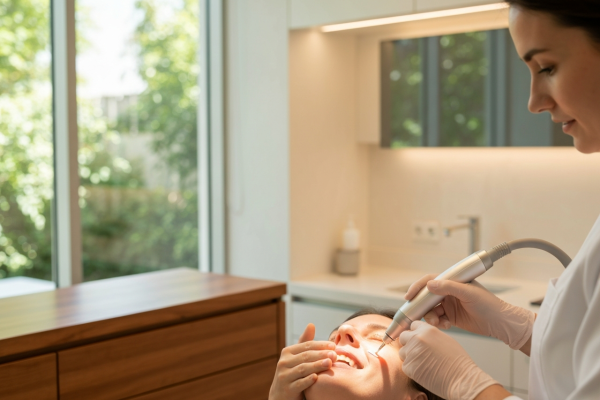
- Laser Pass One: I use the laser fiber (which is about the width of three human hairs) to vaporize the bacteria and diseased tissue inside the pocket. The laser is selective—it is drawn to the dark color of the bacteria and leaves your healthy, pink gum tissue alone.
- Cleaning: We use ultrasonic tools to vibrate off the loosened tartar. This is much gentler than hand scraping.
- Laser Pass Two: I use the laser a second time to warm the blood in the pocket, creating a sticky seal (a clot) around the tooth. This closes the system so new germs can’t get in.
- bite Adjustment: We adjust your bite to ensure there isn’t too much pressure on the healing teeth.
Why I Prefer LANAP Over Traditional Surgery
The difference for the patient is night and day. Because we aren’t cutting the gums with a scalpel or using stitches, the body heals much faster. Most of my patients go back to work the very next day.
There is also a significant biological advantage. Traditional scaling often results in “long teeth” because the gums recede after the swelling goes down. The LANAP Protocol is designed to stimulate regeneration. We are trying to save the tissue, not remove it.
Data Point: Success Rates
According to histological studies on the LANAP Protocol, it is proven to generate true periodontal regeneration. Research indicates that LANAP can facilitate the growth of new cementum, new periodontal ligament, and new alveolar bone on a previously diseased root surface.
Fact: In a human histological study, 100% of the cases treated with LANAP showed new attachment of the gums to the teeth, compared to traditional surgery where re-attachment is often unpredictable.
Comparing Healing Times: SRP vs. LANAP
One of the biggest questions I get is, “How long will I be in pain?” To help you visualize the difference between traditional deep cleaning/surgery and the laser alternative, I have put together this comparison graph.
Patient Recovery & Discomfort Timeline
*Graph represents average patient reported recovery times.
Other Non-Surgical Adjuncts
While LANAP is the heavy hitter for replacing deep scaling and surgery, there are other therapies we can use, sometimes alongside cleaning, to improve your results.
Laser Bacterial Reduction (LBR)
This is a “lite” version of laser therapy. Before a regular cleaning, we use a laser to reduce the bacterial count in the pockets. It prevents bacteria from entering your bloodstream during the cleaning. It is not a full substitute for deep cleaning if you have bone loss, but it is a great preventive measure.
Tray Delivery Systems (Perio Protect)
Another alternative I sometimes discuss is the use of prescription trays. These look like Invisalign aligners or mouthguards. You put medication (usually a peroxide gel) in them and wear them for a few minutes a day. The pressure pushes the medicine deep into the gum pockets where toothbrush bristles can’t reach.
While this is excellent for maintenance, it usually cannot remove hard, calcified tartar on its own. It works best when combined with a non-surgical cleaning.
Systemic Antibiotics
In the past, dentists would often prescribe heavy antibiotic pills to kill gum bacteria. We do this less often now because of antibiotic resistance. However, sometimes we use a low-dose antibiotic (like Doxycycline) not to kill bacteria, but to stop the enzymes that destroy your bone. This is usually an “add-on” to treatment, not a standalone cure.
The Systemic Connection: Why This Matters
I cannot stress enough that your mouth is the gateway to your body. When you ignore gum disease because you are afraid of the pain of scaling, you put your heart at risk. Inflammation in the gums increases inflammation in the cardiovascular system.
For more in-depth reading on how gum disease affects your overall health, I recommend checking out this article from the American Academy of Periodontology. It explains why treating your gums is a life-saving decision.
Data Point: Tooth Loss Prevention
Many patients come to me believing their teeth are hopeless. However, studies specifically regarding the LANAP Protocol have shown a 98% survival rate for teeth that were previously considered “hopeless” or scheduled for extraction, even 5 years after the treatment.
Frequently Asked Questions (FAQ)
Is the LANAP Protocol more expensive than Root Planing and Scaling?
Initially, LANAP can cost slightly more than a standard deep cleaning, but it is usually comparable to or cheaper than traditional gum surgery (osseous surgery). When you factor in that LANAP often prevents the need for implants or dentures later down the road, it is a very cost-effective investment in your health.
Does insurance cover LANAP?
Yes, in most cases. Insurance companies typically look at the “codes” we use for billing. Whether we use a metal scraper or a laser to clean the root, the goal is periodontal scaling and root planing or osseous surgery. We can help you check your specific benefits to see how much is covered.
Can I get LANAP if I take blood thinners?
This is one of the biggest benefits of the LANAP Protocol. Because the laser seals the blood vessels as it works, there is very little bleeding. Patients on aspirin or blood thinners usually do not have to stop their medication, which makes it much safer for patients with heart conditions.
Will my gums grow back?
With traditional scaling, gums often shrink. With LANAP, we see periodontal regeneration. While we can’t promise that your gum line will visually grow up the tooth overnight (like a curtain rising), we are regenerating the attachment underneath the gum line—the bone and ligament—which stabilizes the tooth.
Does the laser hurt?
Most patients report feeling very little. We still use local anesthetic to make sure you are perfectly comfortable, but there is no cutting pain. The post-operative pain is usually managed with nothing more than over-the-counter ibuprofen.
The Future of Your Smile
I hope this guide has helped clarify that you have choices. You do not have to settle for treatments that frighten you. Dentistry has evolved, and technologies like the LANAP Protocol allow me to treat infections aggressively while treating you, the patient, gently.
If you have been told you need root planing and scaling, or if you have been avoiding the dentist because of bleeding gums, please know that there is a better way. We can halt the disease, save your natural teeth, and get you back to smiling without the downtime of traditional surgery.
Your oral health is a journey, and I am here to guide you toward the least invasive, most effective path possible.