Hello and welcome. I am Dr. Bruce Vafa, and today I want to take you on a journey that might change the way you look at your teeth—and your overall health—forever. When most people think about going to the dentist, they think about cavities, cleanings, and maybe a lecture about flossing. But in my practice, we look at the bigger picture.
Have you ever wondered if the silver filling in your molar could be affecting your energy levels? or if that nagging gum issue is connected to your heart health? This is where we step into the world of Biological Dentistry.
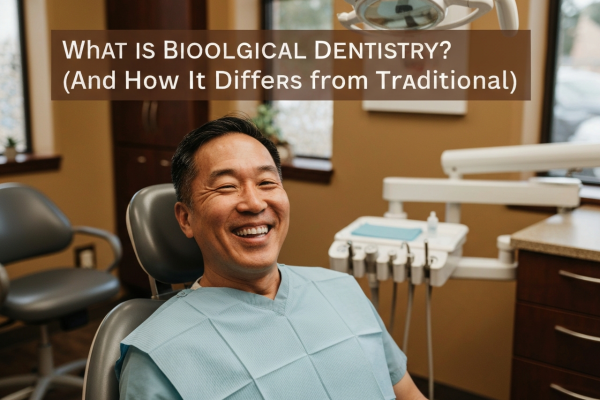
Many patients ask me, “Dr. Vafa, what exactly is biological dentistry, and why is it different from the dentist I grew up seeing?” It is a fantastic question. It is not just about new tools or trendy words; it is about a philosophy that treats your mouth as a window to your entire body. Let’s dive deep into this approach and see how it can transform your smile and your life.
Understanding the Core Philosophy
To put it simply, Biological Dentistry (often called holistic or natural dentistry) operates on the belief that your teeth, gums, and jaw are an integral part of your whole body biology. We do not treat the mouth in isolation. In traditional dentistry, if you have a hole in your tooth, the goal is to fill it. In biological dentistry, we ask: Why is the hole there? What material can we use to fix it that won’t harm the rest of the body? How does this tooth affect your organs?
I view myself not just as a tooth mechanic, but as a physician of the mouth. My goal is to use treatments that are non-toxic, biocompatible (safe for living tissue), and focused on wellness.
The Major Differences: Biological vs. Traditional Dentistry
While both traditional and biological dentists go to dental school and are licensed professionals, our paths diverge when it comes to materials, techniques, and philosophy. Here is how I break it down for my patients.
1. The Materials We Use
This is perhaps the biggest distinction. For over a century, traditional dentistry has used “silver” amalgam fillings. The reality is that these fillings are about 50% mercury. As a biological dentist, I operate a mercury-free and mercury-safe practice.
Data Point: According to the World Health Organization (WHO), dental amalgam is a significant source of human exposure to mercury. Even small amounts of mercury vapor can be released from these fillings during chewing or brushing.
I believe that placing a known toxin like mercury into the human body is counter-intuitive to healing. Instead, I use composite resins or porcelain materials that are durable, look natural, and do not carry the risk of heavy metal toxicity.
2. The SMART Protocol
It is not enough to just refuse to place new mercury fillings; we must be incredibly careful when removing old ones. If a traditional dentist drills out an old silver filling without protection, a massive amount of mercury vapor is released, which you (and the doctor) inhale.
In my office, I strictly follow the SMART protocol (Safe Mercury Amalgam Removal Technique). This involves:
- Using a rubber dam to isolate the tooth.
- Providing an alternative air source (oxygen) for the patient to breathe.
- Using high-volume suction and specialized air filtration systems.
- Covering the patient’s skin and clothes.
3. Biocompatibility Testing
Everyone is different. What works for one person might cause an allergic reaction in another. In traditional dentistry, materials are “one size fits all.” In Biological Dentistry, we often perform biocompatibility testing. This is a simple blood test that tells us exactly which dental materials your specific immune system will tolerate best. I want to ensure that whatever I put in your mouth helps you, rather than causing chronic inflammation.
4. Fluoride vs. Natural Alternatives
Traditional dentistry relies heavily on fluoride treatments. However, there is ongoing debate regarding the ingestion of fluoride and its systemic effects. As a biological dentist, I focus on alternatives that strengthen teeth without the potential risks associated with systemic fluoride intake. We often use ozone therapy, xylitol, and nutritional counseling to build strong enamel naturally.
The Oral-Systemic Connection
One of the most fascinating aspects of my job is acting as a detective. There is a concept we use called the “Meridian Tooth Chart.” Based on ancient Chinese medicine, this chart suggests that each tooth is connected to a specific organ or system in the body via energy pathways (meridians).
For example, I have seen cases where a patient has chronic knee pain, and we discover an infection in a specific premolar connected to that joint’s meridian. When we treat the tooth, the knee often feels better. While this might sound unconventional to traditionalists, the connection between oral health and systemic health is undeniable.
Data Point: Research has consistently shown a link between gum disease and cardiovascular problems. According to the International Academy of Oral Medicine and Toxicology (IAOMT) and other health organizations, people with gum disease have two to three times the risk of having a heart attack, stroke, or other serious cardiovascular event.
This is why I emphasize that brushing and flossing aren’t just about saving your smile—they could be saving your life.
Visualizing the Approach
To help you better understand the difference in focus between the two approaches, I have put together a visual representation of how we prioritize treatment time and resources.
Treatment Focus Comparison
Traditional Dentistry
Biological Dentistry (Dr. Vafa’s Approach)
*Biological dentistry aims for a balanced approach between fixing the immediate issue and ensuring long-term systemic health.
Advanced Techniques We Use
In my clinic, relying on Biological Dentistry means utilizing technology that is less invasive and promotes faster healing.
Ozone Therapy
Oxygen/Ozone therapy is a game-changer. Ozone is a gas that naturally kills bacteria, viruses, and fungi. Instead of drilling away huge amounts of tooth structure, I can often use ozone gas to sterilize a cavity and stop decay in its tracks. We also use it to treat gum infections and sterilize water lines. It is safe, natural, and incredibly effective.
Digital X-Rays and 3D Cone Beam Imaging
We are very conscious of radiation. While X-rays are necessary to see what is going on between teeth and in the bone, I use digital radiography which reduces radiation exposure by up to 90% compared to traditional film. When we need a more detailed view, especially for checking infections in the jawbone (like cavitations), we use 3D Cone Beam imaging for precision.
Laser Dentistry
Lasers allow us to perform treatments with less pain, less bleeding, and often without the need for anesthesia. They stimulate the body’s natural healing response, making recovery much faster.
Root Canals: A Controversial Topic
This is a sensitive subject. In traditional dentistry, if the nerve of a tooth dies, a root canal is the automatic solution. It saves the tooth structure. However, from a biological perspective, we are cautious.
A root canal involves removing the blood supply and nerve from the tooth, essentially leaving a dead organ in the body. Even with the best cleaning, microscopic tubules in the tooth can harbor bacteria. These bacteria can become anaerobic (living without oxygen) and release highly toxic waste products.
I am not saying I never recommend root canals, but I approach them with extreme caution. We use ozone and lasers to sterilize the area as much as possible. However, in some cases, extraction followed by a metal-free Zirconia implant is the safer option for the patient’s overall immune system.
Prevention and Nutrition
I always tell my patients that I would be happiest if I never had to use my drill. Prevention in Biological Dentistry goes beyond “brush twice a day.” It involves looking at your nutrition.
Teeth heal from the inside out. They need proper minerals, vitamins (like Vitamin K2 and D3), and a balanced pH in the mouth. If your diet is high in processed sugars and acids, your body pulls minerals from your bones and teeth to buffer that acid. We work on correcting the internal environment so your teeth remain strong naturally.
Frequently Asked Questions
Is Biological Dentistry more expensive than traditional dentistry?
Sometimes the initial cost can be slightly higher due to the specialized materials (like biocompatible composites) and safety equipment (like air filtration systems) we use. However, because we focus on prevention and high-quality, long-lasting treatments, many patients find it saves them money on future health costs in the long run.
Is Biological Dentistry safe for children?
Absolutely. In fact, it is arguably safer because we avoid using toxic materials like mercury amalgam and minimize radiation exposure. We focus heavily on preventive care and nutrition to help children grow up with strong, cavity-free teeth without unnecessary chemical exposure.
Do you work with other doctors?
Yes, I frequently collaborate with naturopaths, functional medicine doctors, chiropractors, and osteopaths. Since oral health affects the whole body, it often takes a team approach to resolve complex health issues.
Does insurance cover Biological Dentistry?
Most dental PPO plans cover biological procedures just as they do traditional ones. A filling is a filling in the eyes of insurance, regardless of the superior material used. However, some specific holistic therapies (like vitamin infusions) may not be covered. My office team always helps patients maximize their benefits.
Your Path to Wellness Starts Here
Choosing a dentist is a personal decision, but I believe it is one of the most important health decisions you will make. By choosing Biological Dentistry, you are choosing to respect your body’s natural ability to heal. You are choosing materials that work with you, not against you.
I invite you to think about your health goals. If you are looking for a partner in health who listens, who looks at the root cause of illness, and who prioritizes your safety above all else, then this is the path for you. My team and I are here to support you, free of judgment, on your road to a healthier smile and a vibrant life.