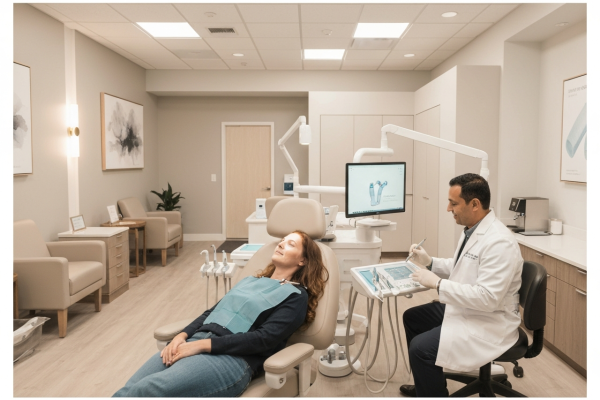
Welcome to my blog. I’m Dr. Bruce Vafa, and today I want to have a serious, yet hopeful conversation about something that goes far beyond a beautiful smile. When most people walk into my dental office, they are thinking about cavities, gum health, or perhaps straightening their teeth. While those are incredibly important, there is a hidden aspect of dentistry that is vital to your overall survival and quality of life.
I am talking about Airway Health.
For a long time, snoring was treated as a joke. It was the punchline in sitcoms or a minor annoyance for a spouse. But as a healthcare provider, I look at snoring and see a red flag. However, airway dentistry is not just about snoring. It is about how your body receives oxygen, how your jaw develops, and how you sleep. It is the difference between surviving your sleep and actually thriving during the day.
The Hidden Epidemic of Oxygen Deprivation
Breathing is the most natural thing we do. We do it thousands of times a day without thinking. But what if I told you that a large percentage of the population isn’t breathing correctly? In my practice, I often see patients who suffer from chronic fatigue, anxiety, and dental issues, all stemming from a compromised airway.
Airway Health refers to the openness of the path your breath takes from your nose and mouth down to your lungs. If that path is narrow, collapsible, or obstructed, your body has to work overtime just to get oxygen. This struggle often happens at night, but the consequences last all day.
It’s Not Just About Being Tired
When we talk about sleep disordered breathing, most people immediately think of the tired businessman falling asleep at his desk. While fatigue is a major symptom, the signs of poor airway health are much more diverse and often surprising. In my years of treating patients, I have learned to look for the subtle clues that the body is fighting for air.
- Teeth Grinding (Bruxism): This is a massive indicator. Many people think they grind their teeth because of work stress. While stress plays a role, grinding is often the body’s attempt to push the jaw forward to open up a collapsing airway while you sleep.
- Crowded Teeth: If your jaw is too narrow to fit all your teeth, it is likely too narrow for your tongue to rest properly. If the tongue doesn’t have room, it falls back into the throat, blocking your air.
- Mouth Breathing: Breathing through the mouth alters the shape of the face and jaw, especially in children, leading to long-term structural issues.
- Neck Pain and Headaches: When you struggle to breathe at night, you often hold your head in awkward positions to keep the airway open, leading to morning stiffness.
The Anatomy of the Problem
To understand why this is happening, we have to look at anatomy. As a dentist, I study the architecture of the face. The roof of your mouth is also the floor of your nose. If you have a high, narrow dental arch (the roof of the mouth), it usually means your nasal sinus floor is elevated, leaving less room for airflow in the nose.
This is where modern dentistry bridges the gap between teeth and overall health. We aren’t just looking at the white enamel; we are looking at the dark tunnel behind it—the throat. If the jaw is recessed (pushed back), the tongue has nowhere to go but back into the throat.
Data Point: The Scale of the Issue
You might be thinking, “Dr. Vafa, is this really that common?” The answer is a resounding yes. According to the American Sleep Apnea Association, it is estimated that 22 million Americans suffer from sleep apnea, with 80 percent of the cases of moderate and severe obstructive sleep apnea remaining undiagnosed.
That means millions of people are walking around exhausted, medicating for anxiety or high blood pressure, not realizing the root cause is in their jaw and throat structure.
Pediatric Airway Health: Saving Our Children
This is a topic very close to my heart. I often see parents bring in children who have been diagnosed with ADHD (Attention Deficit Hyperactivity Disorder). These children are fidgety, they have trouble focusing in school, and they may be “acting out.”
In the world of Airway Health, we know that a sleep-deprived child does not act like a sleep-deprived adult. Adults get lethargic; children get hyperactive. Their bodies flood with adrenaline to stay awake.
If a child breathes through their mouth, snores, or wets the bed past the age where it is common, these are screaming signs of an airway issue. By intervening early with orthopedic appliances that guide the growth of the jaw, we can actually prevent a lifetime of sleep apnea. We can expand the palate, make room for the tongue, and ensure that the child grows into a healthy adult.
The Systemic Connection: How Airway Health Affects the Body
I always tell my patients: the mouth is the gateway to the body. When your airway is compromised, your oxygen saturation levels drop. This sends a panic signal to your brain. Your sympathetic nervous system (the fight or flight response) kicks in.
Instead of resting and digesting during sleep, your heart is racing. This puts immense strain on your cardiovascular system. This is why untreated sleep apnea is heavily linked to high blood pressure, stroke, and heart disease. It is also linked to metabolic issues like Type 2 diabetes. By ignoring the airway, we are ignoring the engine of our life.
Impact of Airway Obstruction on Sleep Quality
Comparing a healthy sleeper vs. a sleeper with airway resistance over an 8-hour period.
Healthy Airway
(Avg Oxygen Saturation)
Restricted Airway
(Mild/Moderate Issues)
Obstructed Airway
(Severe Apnea Drops)
How I Can Help: The Dental Solution
Many people assume the only solution for airway issues is a CPAP machine. While CPAP is a life-saving device for many, it is not the only way, and compliance can be difficult. As a dentist focusing on Airway Health, I look for structural solutions.
We can use Oral Appliance Therapy. These are custom-made devices, similar to a mouthguard, that you wear while you sleep. They gently position the lower jaw forward. By doing this, we physically pull the tongue away from the back of the throat and tighten the soft tissues, preventing the airway from collapsing.
For some patients, especially younger ones or adults willing to undergo treatment, we look at expansion. By widening the dental arch, we create more room for the tongue. It is amazing to watch a patient’s posture improve, their dark circles disappear, and their energy return simply because we made more room in their mouth.
Data Point: The Cost of Ignoring the Issue
The economic impact is just as startling as the health impact. Research indicates that undiagnosed sleep apnea costs the United States economy approximately $150 billion annually in lost productivity, motor vehicle accidents, and workplace accidents. This data emphasizes that treating airway health is an investment in your safety and your success.
For more in-depth information on the symptoms and medical definitions of these conditions, I recommend reading this article from the Sleep Foundation. It is a great resource to understand the medical side of what we treat structurally.
My Approach to Diagnosis
When you come to see me, I don’t just look at your teeth. I look at the back of your throat. I look at the wear patterns on your molars. I ask about your sleep quality. We may use high-tech imaging, like 3D Cone Beam CT scans, to visualize the volume of your airway. We can see exactly where the constriction is happening.
I believe in a collaborative approach. I often work with sleep physicians, ENT specialists, and myofunctional therapists (who are like physical therapists for your tongue and facial muscles). We work as a team to ensure you get the best care.
Frequently Asked Questions
Is airway dentistry only for people who snore loud?
No, absolutely not. While snoring is a common symptom, many people with Upper Airway Resistance Syndrome (UARS) do not snore loudly. They may breathe heavily or just wake up feeling unrefreshed. Silent reflux, teeth grinding, and morning headaches are also signs of airway issues without the “classic” loud snore.
Can a dentist really fix my sleep apnea?
Dentists trained in dental sleep medicine can treat mild to moderate obstructive sleep apnea effectively using oral appliances. For severe cases, we often combine therapy with CPAP or refer for surgical consultation, but for many patients, a dental appliance is a preferred and effective solution.
Is the treatment painful?
Most airway treatments are non-invasive. Oral appliances may cause some morning jaw stiffness initially, but this usually resolves quickly. Myofunctional therapy is painless—it is just exercise for your mouth! We prioritize your comfort throughout the entire process.
At what age should I have my child checked for airway issues?
As early as possible. If you notice mouth breathing, snoring, or grinding in a toddler, bring them in. Early intervention (ages 3 to 7) can guide jaw growth and potentially prevent the need for complex orthodontics or sleep apnea treatment later in life.
Taking the First Step Toward Better Health
I hope this post has opened your eyes to the reality that Airway Health is about so much more than just noise at night. It is about the fundamental fuel your body needs to survive. If you recognize yourself, your spouse, or your child in the symptoms I have described, please do not ignore it.
You do not have to live with chronic fatigue. You do not have to accept teeth grinding as a normal part of life. We have the tools and the technology to help you breathe free and sleep deep. I invite you to come into the office, let’s take a look, and let’s get you on the path to a healthier, more oxygen-rich life.