Your Health Starts in Your Mouth: Understanding Biocompatible Materials
Whenever a new patient walks into my office, I don’t just look at their teeth. I look at the person attached to them. As Dr. Bruce Vafa, I have spent years studying how the things we put inside our mouths affect the rest of our bodies. For decades, dentistry focused purely on mechanics: fixing a hole or pulling a tooth. But today, we know better. We know that the materials used to repair your smile interact with your immune system, your digestion, and your overall well-being.
This brings us to one of the most exciting advancements in modern dentistry: biocompatible materials. If you have ever wondered why some fillings last a lifetime while others cause irritation, or why more people are choosing metal-free options, the answer lies in biocompatibility. In this article, I want to walk you through exactly what these materials are, why I choose them for my patients, and how they can change the future of your health.
What Does “Biocompatible” Actually Mean?
The word “biocompatible” might sound like a complex medical term, but the concept is actually quite simple. It means “life-friendly.” When we say a dental material is biocompatible, we mean that it can exist in your body without harming your tissues or triggering a negative immune response.
Think about it this way: your mouth is a tough environment. It is wet, it faces extreme temperature changes from hot coffee to cold ice cream, and it is full of bacteria. Historically, dentists used materials like silver amalgam (which contains mercury) simply because they were strong and cheap. They didn’t worry as much about how the body reacted to them.
However, the body is smart. When it detects a foreign invader—like a toxic metal—it often mounts a defense. This can lead to inflammation, gum recession, or even systemic issues. Biocompatible materials are designed to be chemically stable and neutral. They play nice with your body. Instead of fighting the material, your gums and bone accept it, allowing your mouth to heal and function naturally.
The Problem with Traditional Materials
To understand the solution, we have to look at the problem. For over a hundred years, the standard for filling cavities was dental amalgam. These are the “silver” fillings many of us grew up with. While they are strong, they are composed of about 50% mercury, along with silver, tin, and copper.
In my practice, I have moved away from these materials for several reasons. First, metals expand and contract with temperature changes at a different rate than your natural tooth structure. Over time, this can cause your natural tooth to crack. Second, there is the issue of galvanism.
Oral galvanism occurs when two different metals in your mouth (like a gold crown and a silver filling) interact with your saliva to create a tiny electrical current. It is essentially a small battery in your mouth. This can cause sensitivity, a metallic taste, and irritation. By using non-metal, biocompatible options, we eliminate this electrical stress entirely.
A Note on Metal Sensitivities
It is more common than you might think for people to have low-grade allergies to metals. Data Point: Research indicates that approximately 10% to 15% of the human population suffers from metal hypersensitivity. When these individuals have metal components permanently installed in their jaw or teeth, it can lead to chronic inflammation that they might not even realize is connected to their dental work.
The Top Biocompatible Materials We Use Today
So, if we aren’t using metal, what are we using? Modern science has given us incredible alternatives that are not only safer but also look much better. Here are the main players in the world of biocompatible dentistry.
1. Composite Resins
These are the tooth-colored fillings used for treating cavities. They are made of a mixture of plastic and glass. The beauty of composite resin is that it bonds directly to the tooth structure. This means I don’t have to drill away as much healthy tooth to place the filling, which preserves the integrity of your smile. We ensure the composites we use are free from BPA (Bisphenol A) to maintain the highest safety standards.
2. Porcelain and Ceramics
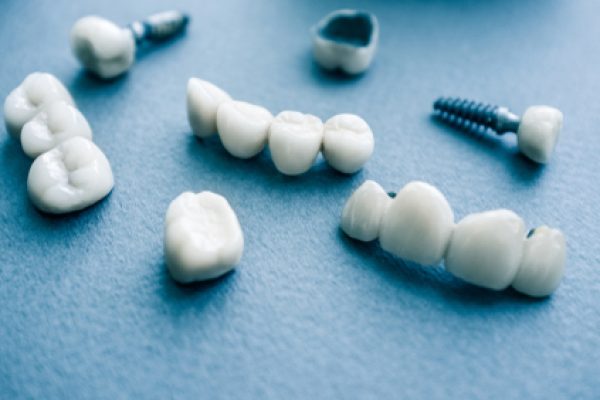
Porcelain is the gold standard for aesthetics. It mimics the light-reflecting properties of natural enamel almost perfectly. We use this for veneers, crowns, and inlays. Porcelain is highly biocompatible because it is essentially a type of glass. It is incredibly smooth, which makes it hard for plaque and bacteria to stick to it. This helps keep the gums surrounding the restoration healthy and pink, rather than red and inflamed.
3. Zirconia
Zirconia has been a game-changer for me and my patients. It is a type of crystal (zirconium dioxide) that is incredibly strong—so strong it is often called “ceramic steel.” We use Zirconia for heavy-duty crowns and bridges, and most importantly, for dental implants.
In the past, implants were only made of titanium. While titanium is generally safe, some patients have sensitivities to it. Zirconia implants are 100% metal-free, white in color (so no grey shadow at the gum line), and the gum tissue tends to heal around Zirconia faster and more tightly than it does around metal.
For more in-depth reading on how these materials interact with biological tissues, I recommend reading this article on biocompatibility and dental materials from the National Institutes of Health (NIH).
Why Biocompatibility Matters for Your Long-Term Health
Choosing biocompatible materials isn’t just about avoiding toxins; it is about promoting longevity. When a material is compatible with your body, the interface between the restoration and your body remains stable.
In my experience, patients who choose biocompatible options report fewer post-operative complications. There is less cold sensitivity and less gum inflammation. Furthermore, because materials like porcelain and zirconia are chemically stable, they don’t corrode. A metal filling will eventually corrode in the wet environment of the mouth, potentially leaking dark stains into the tooth and gums. Biocompatible ceramics remain pristine for decades.
The Immune System Connection
Your mouth is the gateway to your body. If your immune system is constantly fighting a low-grade battle against a material it doesn’t like in your mouth, it has fewer resources to fight off other illnesses. This is the core of holistic dentistry. By removing stressors from the mouth, we lower the overall toxic load on the body.
Data Point: Studies on Zirconia implants specifically have shown a high success rate, with survival rates reported at over 97% after 5 years, comparable to titanium but with better soft-tissue response. This proves we don’t have to sacrifice durability for safety.
Visualizing the Benefits
To help you understand why the shift to biocompatible options is happening so fast, let’s look at a comparison of attributes between traditional metal amalgam and modern biocompatible ceramics.
Aesthetics (Natural Look)
Gum Tissue Health
Durability & Strength
The Aesthetic Bonus
I cannot stress enough how much better these materials look. I have had patients who stopped smiling in photos because they were embarrassed by the dark grey fillings in their back teeth. When we replace those with biocompatible porcelain or composite, the transformation is emotional.
Biocompatible dentistry allows us to practice “invisible dentistry.” The goal is that when you leave my chair, no one should know you had dental work done. They should just see healthy, white enamel. Because these materials bond to the tooth, they are translucent like real teeth. They allow light to pass through, giving your smile a vitality that metal simply kills.
Is Biocompatible Dentistry More Expensive?
This is a fair question. Generally, high-quality ceramics and composites can have a higher upfront cost than cheap amalgam fillings. However, we have to look at the cost over the lifespan of the tooth.
Amalgam fillings rely on mechanical retention—they are wedged in. This often acts like a wedge in a log, creating hairline cracks in the tooth over many years. Eventually, the tooth may break and require a crown or even extraction. Biocompatible materials bond the tooth together, reinforcing the remaining structure. By saving your natural tooth structure now, you are likely saving thousands of dollars in future dental work.
Dr. Vafa’s Advice: How to Transition
You don’t need to rush out and replace every filling in your mouth tomorrow. However, if you have old metal fillings that are breaking down, or if you need new work done, I strongly advise asking for biocompatible options.
When you come in for a consultation, we can discuss:
- Testing for material sensitivities if you have a history of allergies.
- A prioritized plan to replace old, leaking restorations.
- The specific type of biocompatible material that suits your bite and lifestyle.
Frequently Asked Questions
Are biocompatible materials safe for pregnant women?
Yes, biocompatible materials like composite resins and ceramics are generally considered much safer for pregnant women compared to the placement or removal of mercury amalgam, which releases vapor. However, we always coordinate with your OB-GYN and typically avoid elective procedures during the first trimester to be absolutely safe.
Do biocompatible fillings last as long as metal ones?
Modern biocompatible materials are incredibly durable. While early white fillings years ago were softer, today’s ceramics and composites are highly wear-resistant. With proper care, they can last as long as, or even longer than, metal fillings, without the risk of cracking your natural tooth.
Can I be allergic to Zirconia?
Allergy to Zirconia is extremely rare. It is considered an inert material. Unlike metals which can corrode and release ions into the bloodstream, Zirconia remains stable. It is currently one of the safest materials available in medicine and dentistry.
Does insurance cover biocompatible dentistry?
Most dental insurance plans cover composite (white) fillings and ceramic crowns. Some plans may downgrade the coverage to the cost of a silver filling, meaning you pay the difference, but the investment is worth it for your health. We always help you verify your benefits before we start.
How do I know if my current fillings are toxic?
If you have silver-colored fillings, they likely contain mercury. If they are old, they may be leaking. During an exam, I use special magnification and cameras to look for signs of wear, leakage, or corrosion. We can then decide if they need to be replaced for your health.
Looking Forward to a Healthier Smile
The era of putting toxic metals in our mouths is coming to an end. As we learn more about the connection between oral health and systemic health, the choice becomes clear. Biocompatible materials offer a solution that respects the biology of your body while delivering the beautiful, natural aesthetics you want.
In my practice, I am committed to using materials that help you thrive. Your smile is a huge part of who you are, and it deserves the safest, highest-quality care available. If you have questions about what is in your mouth or want to explore metal-free options, I am here to help guide you toward a healthier future.