Welcome to my blog. As a dentist who is passionate about restoring smiles and confidence, I see patients every day who are looking for the best way to replace missing teeth. For a long time, there was really only one major player in the game: titanium. However, dentistry is always evolving. Today, I want to talk to you about a game-changer that has revolutionized my practice and the lives of my patients: zirconia implants.
If you are researching dental implants, you have probably stumbled upon the debate between metal versus metal-free options. It is a hot topic. Many of my patients come in asking specifically for a holistic approach to their oral health. They want materials that are bio-inert and friendly to the body. That is where the conversation about metal-free dental implants begins.
In this post, I am going to walk you through everything you need to know about choosing between zirconia and titanium. I will explain why I am such a big advocate for ceramic options and how they might be the perfect solution for your smile.
Understanding the Basics: What Are Dental Implants?
Before we dive into the specific materials, let’s make sure we are on the same page about what an implant actually is. Think of a dental implant as an artificial tooth root. When you lose a tooth, you lose the root that holds it in the jawbone. To replace that tooth securely, we place a small post into the bone. Over time, your bone heals around this post in a process called osseointegration.
Once that bond is strong, I can attach a beautiful crown on top. The result is a tooth that looks, feels, and functions just like your natural one. The success of this entire process depends heavily on the material used for that post.
The Traditional Choice: Titanium Implants
Titanium has been the industry standard for decades. It is a metal that is very strong and lightweight. Historically, it has a high success rate because the body generally accepts it well. However, titanium is still a metal.
While titanium allergies are considered rare, they do happen. Furthermore, some patients are concerned about having metal permanently embedded in their jawbone due to potential galvanic corrosion. This is an electrochemical process that can occur when different metals are present in the mouth, potentially releasing ions into the body. For patients who have sensitivities or autoimmune issues, this is a valid concern that I take very seriously.
The Modern Solution: What Are Zirconia Implants?
This is where zirconia implants come into the spotlight. Despite the name sounding like a metal, zirconia (zirconium dioxide) is actually a ceramic material. It is a crystal form of the transition metal zirconium, but because it is oxidized, it behaves like a ceramic.
I often tell my patients to think of it like a diamond. It is incredibly hard, durable, and white. Because it is metal-free, it offers a hypoallergenic alternative to traditional titanium. In the world of holistic dentistry, zirconia is often the preferred choice because it is bio-inert. This means it does not trigger chemical reactions, migrate to other parts of the body, or corrode.
Top Benefits of Choosing Metal-Free Zirconia
When I sit down with a patient to discuss their treatment plan, I often highlight several distinct advantages of choosing zirconia. Here is why I believe they are superior for many people.
1. Superior Aesthetics
One of the biggest complaints I hear about titanium implants involves the gum line. Titanium is dark gray. If you have thin gums or if your gums recede over time (which is common as we age), that dark metal can show through. It creates a gray line at the base of the tooth that looks unnatural.
Zirconia implants are naturally white. They match the color of your natural tooth roots. Even if your gums recede slightly, there is no dark metal to hide. For replacements in the “smile zone”—your front teeth—this aesthetic advantage is undeniable. I want your smile to look flawless, and white ceramic helps me achieve that.
2. Incredible Biocompatibility
Biocompatibility refers to how well a material gets along with your body. Zirconia is highly biocompatible. Because it is a ceramic, it encourages the gums to grow back around the implant very effectively. I have observed that the soft tissue around zirconia heals faster and looks pinker and healthier compared to the tissue around metal implants.
There is also the issue of plaque. Plaque and bacteria have a harder time sticking to the smooth surface of zirconia compared to titanium. This is massive for your long-term health. Less plaque means a lower risk of peri-implantitis, which is an infection that can cause an implant to fail.
3. Perfect for Allergy Sufferers
As I mentioned earlier, metal sensitivities are real. If you cannot wear cheap jewelry without breaking out in a rash, you might have a sensitivity to metals. Putting a metal screw into your jawbone could lead to chronic inflammation or implant failure if your body rejects it. Zirconia removes this risk entirely. It is the safest route for anyone with a compromised immune system or known metal allergies.
Analyzing the Data: Success Rates and Sensitivities
I believe in making decisions based on science and data. You might be wondering if these ceramic options are as strong as the metal ones. The short answer is yes.
Data Point 1: According to recent clinical studies, the osseointegration (bone fusing) success rate of modern zirconia implants is roughly 98%. This places them on par with titanium implants, proving that you do not have to sacrifice durability for health.
Data Point 2: Research indicates that while titanium allergy is relatively low, it affects approximately 0.6% of the general population. However, this number can jump significantly higher in patients who already have other metal allergies. By using zirconia, we reduce this risk to virtually zero.
Visualizing the Difference: Plaque Accumulation
I want to show you a representation of why gum health is often better with ceramic implants. Plaque accumulation is a major factor in how long your implant lasts. Bacteria love rough surfaces and certain surface energies.
Bacterial Adhesion & Plaque Risk
(Lower is Better for Gum Health)
*Zirconia’s smooth ceramic surface makes it difficult for bacteria to adhere, promoting healthier gums.
The Corrosion Factor
One of the things that worries me as a practitioner is the oral environment. Your mouth is wet, warm, and full of different acidity levels depending on what you eat. This is a harsh environment for metal.
Titanium can corrode. It is a slow process, but it happens. When it corrodes, particles can be released into the surrounding tissues. In contrast, zirconia is chemically stable. It does not rust, it does not corrode, and it does not conduct electricity. This means no “galvanic shock” and no metallic taste in your mouth. For me, this stability is a cornerstone of holistic health.
Are One-Piece Implants Better?
Traditionally, titanium implants come in two pieces: the screw (implant) and the abutment (connector). This creates a microscopic gap where bacteria can sometimes hide.
Many zirconia implants are designed as a single piece. The implant and the abutment are fused together. This one-piece design eliminates that micro-gap entirely. Because there is no joint deep under the gum line, there is no place for bacteria to congregate and cause inflammation and bone loss. This design feature is brilliant for maintaining the long-term health of the bone and soft tissue.
However, two-piece zirconia options are becoming more available now, which gives me more flexibility in how I restore your smile, especially if the angle of the tooth needs correction. But the hygiene benefits of the ceramic material remain the same regardless of the design.
Durability: Will They Break?
I hear this question a lot. “Dr. Vafa, if it’s ceramic, will it shatter like a plate?”
The answer is no. This is not the ceramic used in your kitchen pottery. This is high-tech, industrial-grade ceramic. It has high flexural strength. While titanium has a slight amount of elasticity, zirconia is extremely rigid. It withstands the forces of chewing very well. In fact, zirconia is widely used in other medical joints, like hip replacements, because of its incredible ability to bear weight without wearing down.
The Procedure: What to Expect
If you decide to move forward with metal-free implants, the process is very similar to traditional implants.
- Consultation: We take 3D scans to look at your bone density.
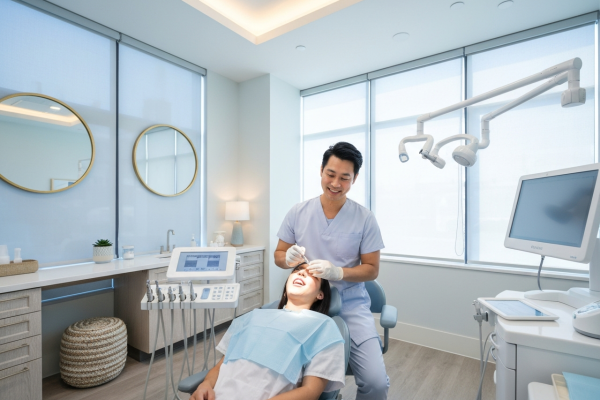
- Placement: I surgically place the ceramic post into the jawbone. Because zirconia is so biocompatible, the surgical site usually heals beautifully.
- Healing: We wait for osseointegration. This can take a few months.
- Restoration: I place the final ceramic crown on top.
Because we are avoiding metal entirely, the healing phase is often very smooth with less inflammation reported by patients.
Holistic Dentistry and Whole-Body Health
I view the mouth as the gateway to the rest of the body. You cannot separate oral health from general health. If you have chronic inflammation in your gums, it affects your heart, your immune system, and your energy levels.
By choosing materials that the body naturally accepts, we are reducing the total toxic load on your system. This is the philosophy behind holistic dentistry. We want to fix the problem (the missing tooth) without introducing new problems (metal toxicity or inflammation). Zirconia implants align perfectly with this philosophy.
For more detailed scientific information regarding the soft tissue response to these materials, I recommend reading this article from the National Center for Biotechnology Information (NCBI).
FAQ: Common Questions About Metal-Free Implants
Are zirconia implants more expensive than titanium?
Generally, yes, the cost is slightly higher. The manufacturing process for zirconia is more complex, and the material itself is costlier. However, when you consider the aesthetic benefits and the health advantages, most of my patients find the investment to be well worth it.
How long do zirconia implants last?
With proper care, they are designed to last a lifetime. Just like natural teeth, they require brushing, flossing, and regular check-ups. Because they resist plaque, maintaining them is often easier, but you cannot neglect your hygiene.
Can anyone get zirconia implants?
Most patients are good candidates. However, because zirconia is very rigid, we need to ensure you have good bone density. If you grind your teeth heavily (bruxism), we may need to address that to protect the implant, although the material is incredibly strong.
Is the surgery painful?
The surgery is performed under anesthesia, so you will not feel pain during the procedure. Post-operative discomfort is usually manageable with over-the-counter medication. Many patients report less swelling with zirconia compared to metal implants due to the tissue-friendly nature of the ceramic.
Making the Right Choice for Your Smile
Your smile is one of your most valuable assets. When it comes to restoring it, you deserve a solution that looks natural, feels great, and supports your overall health. I have seen the transformation in my patients when they realize they can have a strong, permanent tooth without putting metal into their bodies.
While titanium has served the dental community well for many years, I truly believe that the future is metal-free. The combination of aesthetics, biocompatibility, and strength makes zirconia implants the superior choice for the modern patient.
If you are considering dental implants and want to discuss if the metal-free route is right for you, I would love to help you navigate that decision. Every mouth is unique, and we can create a plan that fits your biology and your goals. Let’s work together to build a healthy, beautiful smile that lasts a lifetime.