Have you ever woken up feeling like you barely slept at all? Do you find yourself dragging through the afternoon, relying on coffee just to keep your eyes open? As a dental professional, I hear these complaints from my patients almost every single day. Hello, I am Dr. Bruce Vafa. Over my years in practice, I have realized that the root cause of this daily exhaustion often hides in plain sight: right inside your mouth. Today, I want to talk to you about a life-changing approach to oral health and overall wellness known as airway dentistry.
When most people think about going to the dentist, they picture getting their teeth cleaned, checking for cavities, and maybe discussing a whitening treatment. While those things are absolutely essential, airway dentistry takes a much deeper look. It focuses on how the structure of your mouth, jaw, and neck impacts your ability to breathe freely. By addressing hidden structural issues, we can drastically improve your breathing, enhance your sleep quality, and ultimately give you your energy back.
What Exactly Is Airway Dentistry?
To put it simply, airway dentistry is a specialized field of dental care that looks at the relationship between your oral anatomy and your respiratory system. Instead of just looking at the teeth themselves, I evaluate the entire environment where those teeth live. I look at the size and shape of your jaw, the position of your tongue, and the width of your palate (the roof of your mouth).
Why does this matter? Because your mouth is the gateway to your airway. If your jaw is too narrow, or if your tongue sits too far back in your mouth, it can physically block the air from getting to your lungs while you sleep. When you practice airway-focused care, the goal is to open up that space. We want to ensure that oxygen flows smoothly and effortlessly into your body, both while you are awake and while you are dreaming.
This approach is incredibly positive and proactive. Instead of just treating a broken tooth, we are preventing long-term health issues. When your body gets the oxygen it needs, your heart does not have to work as hard, your brain rests better, and your immune system stays strong. It is truly about treating the whole person, not just the smile.
The Hidden Link Between Your Jaw and Your Breath
You might be wondering how your teeth and jaw can control the air you breathe. It all comes down to basic anatomy. Think of the roof of your mouth as the floor of your nasal cavity. If you have a high, narrow palate, it means the floor of your nose is pushed up, leaving you with a narrow nasal passage. This makes breathing through your nose incredibly difficult.
When you cannot breathe through your nose, your body automatically forces you to breathe through your mouth. Mouth breathing might not sound like a big deal, but it is actually a major red flag. Breathing through your nose filters, warms, and humidifies the air. It also produces a vital gas called nitric oxide, which helps open up your blood vessels and improve circulation. Mouth breathing bypasses all of these amazing benefits.
Furthermore, when you breathe through your mouth while sleeping, your lower jaw naturally falls backward. This pushes your tongue right into your throat, creating an instant roadblock for your airway. As your body struggles to pull air past this roadblock, the tissues in your throat vibrate. That vibration is what we commonly know as snoring. But snoring is often just the tip of the iceberg.
Recognizing the Warning Signs
Many of my patients are surprised to learn that their daily struggles are connected to their airway. Because these issues develop slowly over time, people often accept them as a normal part of getting older. But you do not have to live with these symptoms. Here are some of the most common signs that you might benefit from an airway-focused evaluation:
- Loud, chronic snoring: This is a clear indicator that air is struggling to pass through your throat.
- Waking up gasping or choking: This means your airway collapsed completely, and your brain had to hit the panic button to wake you up to breathe.
- Teeth grinding (Bruxism): Often, people grind their teeth at night as an unconscious physical response to push the jaw forward and open a collapsed airway.
- Morning headaches: A lack of oxygen and the physical strain of teeth grinding can leave your head pounding when you wake up.
- Daytime fatigue and brain fog: Even if you sleep for eight hours, poor oxygen flow means your brain never enters the deep, restorative stages of sleep.
The impact of ignoring these signs can be massive. Let us look at our first important data point: According to the American Sleep Apnea Association, an estimated 22 million Americans suffer from sleep apnea, with 80 percent of the cases of moderate and severe obstructive sleep apnea remaining completely undiagnosed. That means millions of people are walking around exhausted, putting immense strain on their hearts, and they have no idea that their airway is the culprit.
How Sleep Apnea Steals Your Rest
When the airway blockages become frequent and severe, it transitions into a medical condition called Obstructive Sleep Apnea (OSA). During an apnea event, you actually stop breathing for ten seconds or more. Your brain senses the drop in oxygen, releases stress hormones like adrenaline, and forces you into a lighter stage of sleep so you can take a breath.
Imagine someone poking you awake every five minutes while you try to sleep. You would be miserable the next day! That is exactly what sleep apnea does to you internally, even if you do not remember waking up. Over time, this constant state of stress takes a heavy toll on your cardiovascular system, increasing the risk of high blood pressure, strokes, and heart disease.
If you want to learn more about the medical side of this condition, there is a fantastic and detailed resource on Obstructive Sleep Apnea by the Sleep Foundation. As an airway-conscious dentist, I often work hand-in-hand with sleep physicians to tackle this exact problem, bringing dental solutions to medical issues.
The Data: How Treatment Changes Lives
The good news is that we have incredibly effective ways to treat these breathing obstructions. By stepping away from the traditional model and focusing on airway expansion and support, the results are nothing short of spectacular. This brings me to our second critical data point: Clinical research shows that custom oral appliances used in airway dentistry can reduce sleep apnea events by up to 60%, drastically improving nighttime oxygen levels and daytime alertness.
To help you visualize the impact of these treatments, I have put together a simple graph showing the average improvement in a patient’s sleep quality and airway blockages before and after receiving targeted dental airway treatment.
Average Apnea Events Per Hour (Before vs. After Treatment)
*Graph representing average patient improvement in an airway-focused dental program.
Transformative Treatments We Use
So, how exactly do we achieve these amazing results? There are several innovative, non-invasive treatments we use to remodel the airway and support healthy breathing. Here are the primary methods I use to help my patients reclaim their health:
Custom Oral Appliances
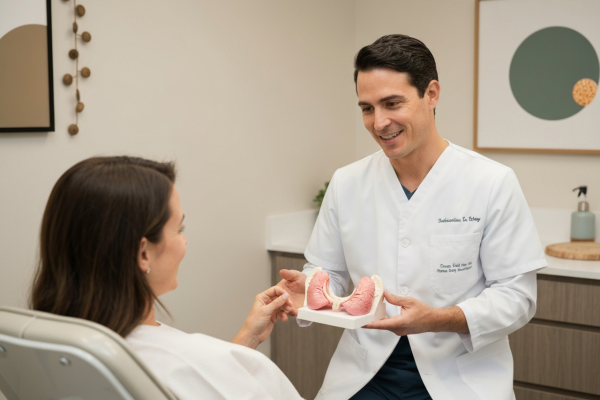
For many adults, a custom-fitted oral appliance is the fastest route to a better night’s sleep. These look somewhat like a sports mouthguard or an orthodontic retainer. You wear it only while you sleep. The appliance gently shifts your lower jaw slightly forward and holds it in place. By doing this, it pulls the tongue forward too, keeping it from collapsing against the back of your throat. Many patients who cannot tolerate a bulky CPAP machine find these appliances to be absolute lifesavers.
Palatal Expansion
If the root cause of your breathing issue is a narrow upper jaw, we can use a device called a palatal expander. This is incredibly effective in children because their bones are still growing and malleable. By gently widening the roof of the mouth, we simultaneously widen the floor of the nasal cavity. This allows a child to transition from mouth breathing to healthy nose breathing. However, even adults can benefit from certain modern expansion techniques that safely widen the dental arch and create more room for the tongue.
Myofunctional Therapy
Think of myofunctional therapy as physical therapy for your mouth and face. Sometimes, the muscles of the tongue, lips, and cheeks are weak or uncoordinated. If your tongue rests at the bottom of your mouth instead of naturally suctioning to the roof of your mouth, it will easily fall backward when you sleep. I often prescribe specific, easy-to-do exercises that train your oral muscles to sit in the correct posture. Stronger muscles mean a firmer, more open airway.
Clear Aligner Therapy
Sometimes, simply straightening the teeth and aligning the bite with clear aligners can create the space needed for the tongue to rest properly. When the bite is balanced, the jaw joints sit comfortably, and the airway opens naturally.
The Life-Changing Benefits of Better Breathing
When you commit to improving your airway health, the benefits ripple out into every single aspect of your life. I have seen patients come into my office looking exhausted, pale, and stressed, only to return a few months later looking vibrant and full of life.
First and foremost, your energy levels will soar. When your brain gets uninterrupted, high-quality sleep, you wake up feeling truly refreshed. You will notice improved focus at work, a better mood, and a drastic reduction in that dreaded afternoon slump. Furthermore, your immune system gets a massive boost. Sleep is when your body repairs itself; without good sleep, you are highly susceptible to getting sick.
From a dental perspective, fixing your airway often stops teeth grinding in its tracks. This protects your precious tooth enamel from cracking and wear, saving you from expensive dental crowns or root canals in the future. It is a beautiful cycle: better breathing leads to better sleep, which leads to a healthier body and a stronger, more beautiful smile.
Frequently Asked Questions
What is the difference between a regular dentist and an airway dentist?
A traditional dentist primarily focuses on the teeth and gums—fixing cavities, doing root canals, and cleaning teeth. As an airway-focused dentist, I do all of that, but I also evaluate the structure of your face, jaw, and throat to ensure your breathing is unobstructed. I look at the “why” behind dental issues, not just the “what.”
Does airway dentistry hurt?
Not at all! The treatments we use, such as oral appliances and myofunctional therapy exercises, are non-invasive and painless. There might be a short adjustment period where a mouthguard feels a bit different when you sleep, but it is generally very comfortable and easy to adapt to.
Can children benefit from airway-focused treatments?
Absolutely. In fact, childhood is the best time to address airway issues. If a child breathes through their mouth, snores, or has behavioral issues like ADHD (which is frequently linked to poor sleep), early intervention with palatal expanders can guide their facial growth, ensuring they develop a healthy, wide airway for the rest of their life.
Is a dental oral appliance better than a CPAP machine?
It depends on the severity of your sleep apnea. CPAP machines are the gold standard for severe sleep apnea. However, many people find the masks uncomfortable, loud, and restrictive. For mild to moderate sleep apnea, or for patients who simply cannot tolerate a CPAP, a custom dental appliance is an incredibly effective, comfortable, and highly recommended alternative.
Your Path to a Healthier Tomorrow
I hope this deep dive has shed some light on the incredible connection between your mouth and your overall well-being. As Dr. Bruce Vafa, my passion is helping you live your best, most energetic life. You do not have to accept poor sleep, chronic fatigue, or loud snoring as your permanent reality. Your body wants to heal, it wants to rest, and it wants to breathe freely.
If you or a loved one are experiencing any of the warning signs we discussed today, I highly encourage you to seek out an evaluation. By taking a closer look at your airway, we can unlock a level of health, happiness, and vitality that you might have thought was lost forever. Take a deep breath through your nose, imagine waking up fully rested, and know that a brighter, healthier tomorrow is entirely within your reach.