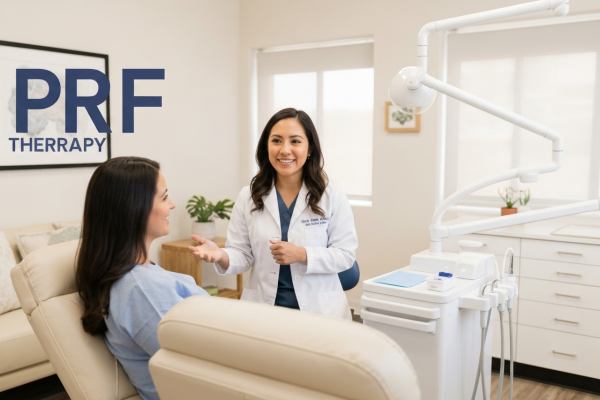
When patients walk into my office, one of the biggest concerns they have isn’t always about the procedure itself. It is about what happens after. I often hear questions like, “Doctor, how long will I be swollen?” or “When can I eat normal food again?” As Dr. Bruce Vafa, I take these concerns very seriously. My goal is not just to fix your teeth but to ensure your journey to recovery is as smooth and comfortable as possible.
For years, the dental industry relied on the body’s natural, sometimes slow, ability to heal. But today, we have a revolutionary tool that changes the game: PRF therapy. Platelet-Rich Fibrin (PRF) is a natural, biological boost that jumpstarts your healing process. It uses your body’s own resources to repair tissues faster and more efficiently.
If you are considering dental implants, extractions, or gum surgery, understanding PRF therapy could be the key to a better experience. Let’s dive into exactly what this is and why I recommend it to so many of my patients.
What Exactly is PRF Therapy?
You might be wondering, “What is this magic ingredient?” The answer is simple: it is you. PRF stands for Platelet-Rich Fibrin. It is a byproduct of your own blood that is rich in platelets, white blood cells, and fibrin.
To explain it simply, think of your blood as a delivery system. It carries oxygen, nutrients, and repair cells to different parts of your body. When you get a cut on your finger, your blood rushes to the site to clot the wound and start rebuilding the skin. PRF therapy essentially takes that natural “repair team,” concentrates it, and places it directly where you need it most—right at the site of your dental surgery.
Unlike synthetic additives or chemicals, PRF is 100% autologous. In medical terms, that means it comes from the same individual who receives it. There is no risk of rejection because your body recognizes the material as its own.
How the Procedure Works in My Chair
One of the things my patients love about PRF therapy is how straightforward the process is. It does not require a separate appointment or a hospital visit. We do it right here, chairside, while we prepare for your main treatment.
Step 1: The Blood Draw
The process begins just like a routine blood test you might get at your doctor’s office. I draw a small amount of blood from your arm. It is a quick pinch, and we only need a few vials.
Step 2: The Spin
Immediately after drawing the blood, I place the vials into a specialized centrifuge. This machine spins the blood at a very specific speed. The spinning force separates the blood components based on their density.
The red blood cells, which are heavy, move to the bottom. The “liquid gold”—the layer containing the fibrin, white blood cells, and platelets—rises to the top. This is the PRF clot.
Step 3: Application
I gently remove this yellow, jelly-like clot from the vial. Depending on the surgery, I can compress it into a membrane (like a natural bandage) or use it as a plug. I place this directly into the extraction socket, over the bone graft, or around the dental implant.
The Science: Why Fibrin Matters
You may have heard of PRP (Platelet-Rich Plasma), which is popular in sports medicine and facials (often called the “vampire facial”). While PRP is good, PRF is the next generation—specifically evolved for better healing.
The secret lies in the Fibrin. Fibrin acts as a scaffold or a 3D mesh. When we place PRF in a surgical site, this fibrin mesh traps the platelets and white blood cells. Instead of releasing all the growth factors immediately (which happens with PRP), the fibrin mesh releases them slowly over 7 to 10 days.
This slow release is crucial. It means your surgical site gets a steady supply of “healing fuel” during the most critical days of recovery. This sustained release of growth factors like VEGF (Vascular Endothelial Growth Factor) stimulates the formation of new blood vessels, which is essential for tissue regeneration.
Two Critical Data Points on PRF Efficacy
I believe in evidence-based dentistry. It is important to look at the numbers to understand why I am so enthusiastic about this technology.
- Data Point 1: Soft Tissue Healing. Clinical studies have shown that PRF can significantly accelerate the closure of soft tissue. Research indicates that surgical sites treated with PRF can show up to a 40-50% improvement in soft tissue epithelialization (skin closure) within the first week compared to sites left to heal naturally. This means the open wound closes faster, reducing the window of opportunity for bacteria to enter.
- Data Point 2: Reduction in “Dry Socket.” One of the most painful complications after a tooth extraction is a dry socket. This happens when the blood clot dislodges. Using PRF acts as a superior, stable clot. In high-risk extractions (like impacted wisdom teeth), the use of PRF has been shown to reduce the incidence of dry socket to nearly 0% in many clinical trials, compared to the standard risk rate which can range from 10% to 30% depending on the difficulty of the extraction.
Visualizing the Healing Advantage
To give you a better idea of how PRF therapy impacts your recovery timeline, I have put together a visual representation of the healing intensity over the first two weeks.
Healing Activity: Natural Clot vs. PRF Therapy
(Higher percentage = More active cell regeneration)
*Graph illustrates the sustained release of growth factors provided by PRF compared to the rapid drop-off in natural clotting.
Major Benefits of PRF in Dental Procedures
In my practice, I don’t use technology just because it is new. I use it because it offers tangible benefits to you. Here is why I suggest PRF therapy:
1. Reduced Pain and Swelling
Inflammation is a natural response to surgery, but excessive inflammation causes pain. Because PRF contains white blood cells that fight infection and growth factors that speed up tissue closure, the inflammatory phase is often shorter. Many of my patients report significantly less post-operative pain and require fewer painkillers.
2. Faster Bone Regeneration
This is vital for dental implants. An implant needs strong bone to fuse with (a process called osseointegration). PRF stimulates the bone cells (osteoblasts) to grow faster and denser. This can sometimes shorten the waiting period between placing a bone graft and placing the final crown.
3. Lower Risk of Infection
Your blood is your body’s best defense against bacteria. PRF is highly concentrated with leukocytes (white blood cells). When I place a PRF membrane over a surgical site, it acts like a biological shield that actively fights off any bacteria trying to enter the wound.
When Do I Recommend PRF?
While PRF is beneficial for almost any oral surgery, there are specific scenarios where I consider it a “must-have”:
- Wisdom Teeth Removal: To prevent dry sockets and speed up the healing of those large extraction sites.
- Dental Implants: To ensure the titanium screw fuses solidly with your jawbone.
- Bone Grafting: PRF is often mixed with bone graft material to create “sticky bone,” which is easier to mold and heals much harder.
- Gum Recession Surgery: PRF membranes can be used to help thicken gum tissue and cover exposed roots.
- Sinus Lifts: When we need to add bone to the upper jaw near the sinus cavity, PRF helps the sinus membrane heal quickly if it was repaired.
For more in-depth reading on the biological mechanisms of this therapy, you can review clinical studies on platelet-rich fibrin published by the National Institutes of Health.
Addressing Common Concerns
Even with a procedure as natural as this, it is normal to have questions. I want to make sure you feel completely confident before we begin.
Is it safe?
Absolutely. Because we use your own blood, there is zero risk of an allergic reaction or disease transmission. It is the most biocompatible material we can use.
Does the blood draw hurt?
If you have ever had blood drawn for a yearly physical, you know exactly what to expect. It is a quick pinch. We do it while you are already comfortable in the dental chair, and if you are receiving sedation for your surgery, you likely won’t even remember it happening.
Frequently Asked Questions (FAQ)
How much does PRF therapy cost?
The cost can vary depending on the complexity of the surgery and how many vials of blood we need to draw. However, because it is processed in-office and doesn’t require purchasing expensive synthetic materials, it is generally very affordable compared to other regenerative treatments. We can provide a specific quote during your consultation.
Will insurance cover PRF?
Dental insurance plans vary greatly. Some plans classify PRF as a distinct surgical benefit, while others may consider it an optional upgrade. My office team is expert at maximizing your benefits and can check your specific coverage to see if this therapy is included in your plan.
Can anyone get PRF therapy?
Most patients are excellent candidates. However, patients with certain blood disorders (like platelet dysfunction) or those with extremely low blood counts might not get the full benefit. During our exam, I will review your medical history to ensure it is the right choice for you.
How long does the PRF process take?
It adds very little time to your appointment. The blood draw takes about 2 minutes, and the centrifuge spins for roughly 12 to 15 minutes. We usually do this while you are getting numb, so it doesn’t extend your time in the chair at all.
Is PRF better than synthetic membranes?
Synthetic membranes serve a purpose (usually to hold space), but they do not have biological activity. They don’t “teach” your body to heal. PRF is bioactive—it actively stimulates healing. In many cases, I might use them together, but PRF offers biological advantages that plastics or animal-derived products simply cannot match.
Your Healing Journey Starts Here
In modern dentistry, we shouldn’t just focus on the mechanical repair of teeth; we must respect the biology of the human body. By using PRF therapy, I am essentially utilizing your body’s own super-power to heal itself. It bridges the gap between a surgical procedure and a comfortable recovery.
If you have been putting off dental surgery because you are worried about the downtime or the pain, let’s talk. This technology has changed the experience for countless patients of mine, turning a feared procedure into a manageable, quick-healing process. I look forward to helping you achieve a healthy smile with the most advanced, natural care available.