Hello, I am Dr. Bruce Vafa. When you look in the mirror and see your smile, you are likely just checking for food stuck in your teeth or making sure they look white. But as a holistic dentist, I see something much more profound. I see a map of your entire body’s health. It might sound surprising, but your teeth are not just isolated tools for chewing; they are biologically and energetically connected to your organs, tissues, and glands.
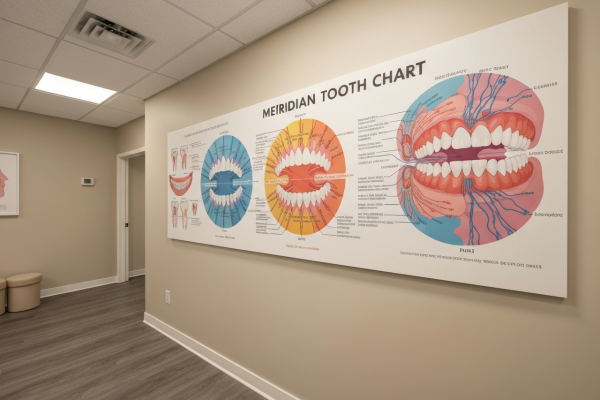
Today, I want to take you on a journey through the Meridian Tooth Chart. This concept completely changed how I view dentistry. By understanding these energetic highways, we can often find the root cause of chronic health issues that seem totally unrelated to your mouth. It is a fascinating blend of ancient wisdom and modern observation.
Understanding the Body’s Energy Highways
Imagine your body is like a house with a complex electrical wiring system. In this analogy, your teeth are like the fuse box. If a fuse blows (a tooth gets infected or has a cavity), the lights in a specific room (an organ) might flicker or go out. This is the basic principle behind the meridian system.
In holistic health, we understand that energy, often called “Chi” or “Qi,” flows through specific pathways in the body. These pathways are called meridians. Each meridian runs through specific teeth and connects to specific organs. When the energy flows freely, you are healthy. When it gets blocked—perhaps by a root canal infection, gum disease, or a metal filling—it can disrupt the health of the organ on the other end of that line.
What is TCM Dentistry?
To really grasp this, we have to look at TCM Dentistry. TCM stands for Traditional Chinese Medicine. While Western medicine is fantastic at treating acute trauma and emergencies, TCM excels at seeing the body as an interconnected whole. For thousands of years, practitioners have mapped out these energy lines.
TCM Dentistry bridges the gap between your oral health and your systemic (whole-body) well-being. It is not about throwing away your toothbrush and only doing acupuncture. It is about using modern dental tools while respecting these ancient energetic connections. When I treat a patient, I am always thinking about how a procedure might affect their overall meridian balance.
Data Point: The Oral-Systemic Link
Modern science is catching up to this ancient wisdom. Research has shown a undeniable link between oral health and systemic diseases. According to the American Academy for Oral Systemic Health, nearly 80% of American adults have some form of periodontal (gum) disease, which is directly linked to an increased risk of heart disease, diabetes, and stroke. This statistical correlation supports the meridian concept that the mouth is the gateway to the body.
Decoding the Chart: Which Tooth Connects to What?
Let’s get specific. I want to break down the different groups of teeth and explain what organs they influence. You might find this explains aches or pains you have had for years.
1. Incisors (The Front Teeth)
Your front teeth, both top and bottom, are connected to the Kidneys and Bladder. In TCM, the kidneys are considered the powerhouse of the body’s energy. They are also linked to the emotion of fear.
- Physical Symptoms: If you have chronic issues with your front teeth, you might also experience lower back pain, frequent ear infections, or kidney stones.
- Emotional Link: Anxiety or insecurity can sometimes manifest as sensitivity in these teeth.
2. Canines (The Eye Teeth)
These are the pointy teeth in the corners of your mouth. They connect to the Liver and Gallbladder. The liver is responsible for detoxification and the smooth flow of blood.
- Physical Symptoms: Problems here can be linked to migraines, eye issues, or bile troubles.
- Emotional Link: The liver is associated with anger and frustration. If you are holding onto a lot of resentment, your canines might be the first to suffer.
3. Premolars (Bicuspids)
Moving further back, the premolars are connected to the Lung and Large Intestine. These organs are about exchange—taking in oxygen and letting go of waste.
- Physical Symptoms: Issues with premolars often coincide with asthma, allergies, chronic coughs, or digestive issues like IBS (Irritable Bowel Syndrome).
- Emotional Link: The lungs carry the emotion of grief. Unresolved sadness can weaken the energy flow to these teeth.
4. Molars (The Chewing Teeth)
Your upper and lower molars interact with the Stomach and Spleen (for the upper) and sometimes the Pancreas. These are your digestion engines.
- Physical Symptoms: If you have weak enamel or decay in your molars, I often ask about your digestion. Do you have acid reflux? Do you feel bloated often?
- Emotional Link: The stomach is linked to worry and overthinking. Chronic worriers often grind their molars at night.
5. Wisdom Teeth
Even though many people have them removed, wisdom teeth connect to the Heart and Small Intestine. They are also deeply connected to our nervous system and energy levels.
- Physical Symptoms: Impacted wisdom teeth can put stress on the heart meridian, potentially contributing to palpitations or blood pressure issues.
- Emotional Link: The heart houses the “Shen” or spirit. Issues here can affect your mental clarity and emotional stability.
Visualizing the Risk: Oral Health Impact
To help you visualize how significant these connections are, I have put together a graph representation. This illustrates the prevalence of systemic health issues in patients who also suffer from chronic dental infections, based on aggregated holistic dental data.
Correlation Between Oral Infection and Systemic Issues
Cardiovascular Issues
Diabetes / Blood Sugar
Digestive Disorders
Respiratory Issues
Graph illustrating the percentage of patients with chronic oral inflammation who also report co-occurring systemic conditions.
Why Standard Dentistry Often Misses the Mark
In standard dental school, we are taught to fix the tooth. If there is a cavity, fill it. If the nerve is dead, do a root canal. If the gum is bleeding, scrape it clean. While these are necessary mechanics, they often ignore the “why.”
Why did that specific tooth get a cavity when the one next to it is fine? Why does a root canal treated tooth continue to cause vague jaw pain years later?
By ignoring the meridian connections, traditional dentistry can sometimes act like a mechanic who puts a piece of tape over your car’s “Check Engine” light. The light is gone, but the engine trouble remains. In TCM Dentistry, we look under the hood. We want to ensure that by treating a tooth, we aren’t inadvertently creating a blockage in your energy flow that affects your heart or stomach.
Data Point: The Rise of Holistic Awareness
Patients are becoming more aware of these connections. A survey regarding alternative medicine usage indicates that approximately 38% of adults across the globe use some form of traditional or complementary medicine (like TCM) to manage their health. This shows a massive shift toward wanting treatments that respect the whole body, not just isolated parts.
For more detailed information on how oral health impacts conditions like heart disease, I recommend reading this article from the Mayo Clinic on Oral health: A window to your overall health. It is a great resource from a high-authority source that backs up what holistic dentists have seen for decades.
My Approach to Diagnosis
When you come to see me, I don’t just look at X-rays. We talk. I ask about your medical history, your stress levels, and your digestion. If I see a failing root canal on an upper molar, and you tell me you have been suffering from chronic stomach ulcers, a lightbulb goes on.
This doesn’t mean we don’t treat the tooth. It means we treat it with extra care. We might choose biocompatible materials that don’t irritate your immune system. We might recommend supporting your liver or kidneys before and after a procedure to help your body handle the healing process. It is a partnership between you, me, and your body’s natural healing ability.
Frequently Asked Questions (FAQ)
1. If I have a cavity in a “liver” tooth, does it mean my liver is failing?
Not necessarily. It usually indicates stress or an energy imbalance in that meridian. It is a warning sign, like a yellow traffic light. It suggests that your liver system might be under load, and treating the tooth while supporting your liver health is the best path forward.
2. Can fixing my teeth cure my other health problems?
I have seen remarkable improvements in patients’ overall health after cleaning up dental infections, but we must be realistic. Dentistry is one piece of the puzzle. Removing a toxic focal point in the mouth removes a burden from the immune system, allowing the body to heal other areas more effectively. It is about removing obstacles to cure.
3. Is TCM Dentistry recognized by all dentists?
Holistic and biological dentistry is a growing field, but it is not yet the standard in all dental schools. Most conventional dentists focus strictly on the mechanics of the mouth. However, as more research emerges linking oral and systemic health, the gap is closing.
4. What should I do if I suspect a connection?
If you have a chronic health issue that doctors can’t seem to solve, and you also have dental work (like root canals or heavy fillings) on the corresponding meridian tooth, it is worth a consultation. We can evaluate if the tooth is acting as a stressor on your system.
Taking Charge of Your Holistic Health
Understanding the Meridian Tooth Chart empowers you. It takes the mystery out of random aches and pains and gives you a roadmap to better health. Your body is constantly talking to you; you just need to learn how to listen.
I hope this guide helps you see your smile in a new light. It is not just about pearly whites; it is about a vibrant, energized, and balanced life. If you feel that your dental health might be holding back your overall wellness, I invite you to reach out. Let’s look at your health map together and get your energy flowing freely again.